Blog
Net vs enclosure: when a hitting net is enough
A net fits in a garage corner and leaves the monitor budget intact. But some buyers outgrow it in a month.
By the My Golf Obsession teamPublished Nov 3, 2026
Carl's Place
Intro
A hitting net isn't a cheap enclosure. It's a different product with a different goal, and buyers can end up disappointed if they judge it by the wrong one. An enclosure builds a room around a projected picture. A net catches the ball and stays out of the way, letting you practice with real data on a phone, tablet, or TV screen beside you.
That difference shapes almost everything else: cost, space, setup time, and how long the setup stays up. Get the goal right first, and the rest of the decision is easy.
What a net setup actually is
A net setup has four parts, and none of them is a projector. You need a launch monitor, a hitting mat, a net, and something to show the numbers. The monitor measures the shot. The mat gives you a surface to hit from. The net stops the ball. A phone or tablet shows carry, speed, and spin, or runs a practice app.
There's no compromise on data here. A camera monitor beside the ball and a radar monitor behind the ball both measure the same shot, whether the ball lands in a net or on an impact screen. The screen changes what you see, not what the monitor knows.
Setup is the other half of the appeal. A good return net goes up in minutes, folds away or moves to a corner, and needs no ceiling mount, no projector alignment, and no light control. That matters in a garage that still parks a car, or a spare room that still hosts guests.
What you give up
Start with the obvious loss: there's no projected picture. You don't watch the ball fly down a fairway on a big screen. You watch numbers on a small screen, or a course rendered on a TV that sits beside the bay. For some golfers, that kills the fun. For others, it barely registers, because practice was the point all along.
Ball return is the second question, and it varies by net. Cheap pop-up nets drop the ball at your feet in a heap, or don't return it at all, and you spend the session walking back and forth. A proper return net uses a shaped bottom panel to roll the ball back toward you. Check that behavior before you buy, because it decides whether a 30 minute session feels like practice or like ball collection.
Containment is the third loss, and the one to take seriously. A net alone covers the target area, not the room. A topped shot, a shank, or a high wedge can miss the net entirely. Many net packages offer side barriers and a top panel as add-ons, so budget for them if you hit indoors, near windows, or near anything you don't want to explain to an insurer.
What you keep
You keep the full practice value, and that's a bigger deal than it sounds. Gapping, wedge distances, start direction, and carry numbers all work exactly the same into a net. A launch monitor doesn't care where the ball stops. It cares about the first few feet of flight, and a net gives it those feet cleanly.
You also keep portability and the lowest entry cost in the hobby. A net setup can move from garage to backyard to a friend's house, and it can be taken down when the room needs to do something else. An enclosure, once built and aligned, tends to stay put. If you're still testing whether the simulator habit is real, that flexibility is worth more than a prettier room.
The size test: one real net, by the numbers
The Net Return Pro Series V2 shows what a serious net looks like on paper. It measures 8 feet wide, 7 feet 6 inches tall, and 3 feet 6 inches deep, and weighs about 28 pounds. Its patented S-shape design absorbs the ball and rolls it back to your feet, and the maker rates it for ball speeds up to 225 mph. Setup takes under 5 minutes with no tools, according to the maker's setup guide, and that guide puts the ball about 5 to 10 feet from the net when a launch monitor is in use.
Those numbers also set the room test. The net itself is only 3 feet 6 inches deep, but you still need room behind you to swing, room for the ball to travel to the net, and ceiling height for a full swing with a driver. Measure the tallest golfer in the house, with a driver, before you order. A net that fits the garage on paper but clips the ceiling on a follow-through is not a bargain.
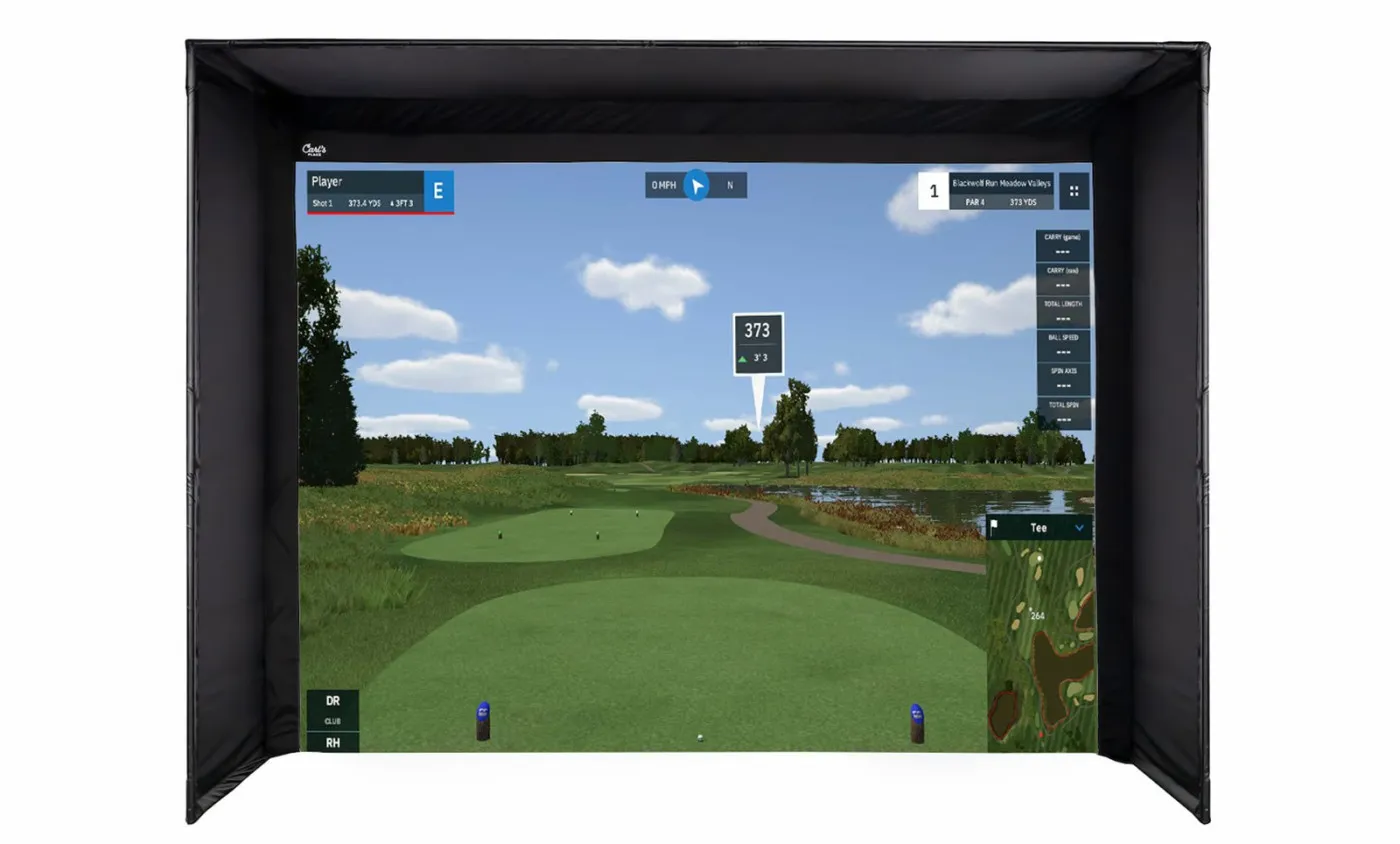
Compare that with a basic enclosure kit. Carl's Place lists its DIY enclosure at 8 feet wide, 8 feet tall, and 5 feet deep, with the tee 10 feet from the screen. The enclosure is deeper, taller, and fixed in place, and it still needs a projector, a screen, and light control on top. The net asks less of the room in every direction except one: it asks you to accept a smaller picture.
When the net starts to feel small
Most net buyers outgrow the net in one of three ways. First, they want course play on a big screen, not numbers on a tablet. Second, they get tired of moving the net, or their family gets tired of looking at it. Third, they start worrying about misses, because faster swings and more confident friends mean more balls near the edges.
None of those is a failure of the net. They are signs the goal changed. If course play on a projected screen is now the point, stop upgrading the net and work through the enclosure properly: room size, screen size, projector throw, and light control, in that order. Our simulator maintenance guide covers the screen and mat care that comes with that bigger build, since screens wear in one spot and mats compress where you always stand.
Don't buy the enclosure version of the same mistake, though. An enclosure ordered before the room is measured, or before you know whether you even like practicing indoors, is just a more expensive guess. The net phase is useful precisely because it answers those questions cheaply.
Who should buy the net, and who should skip it
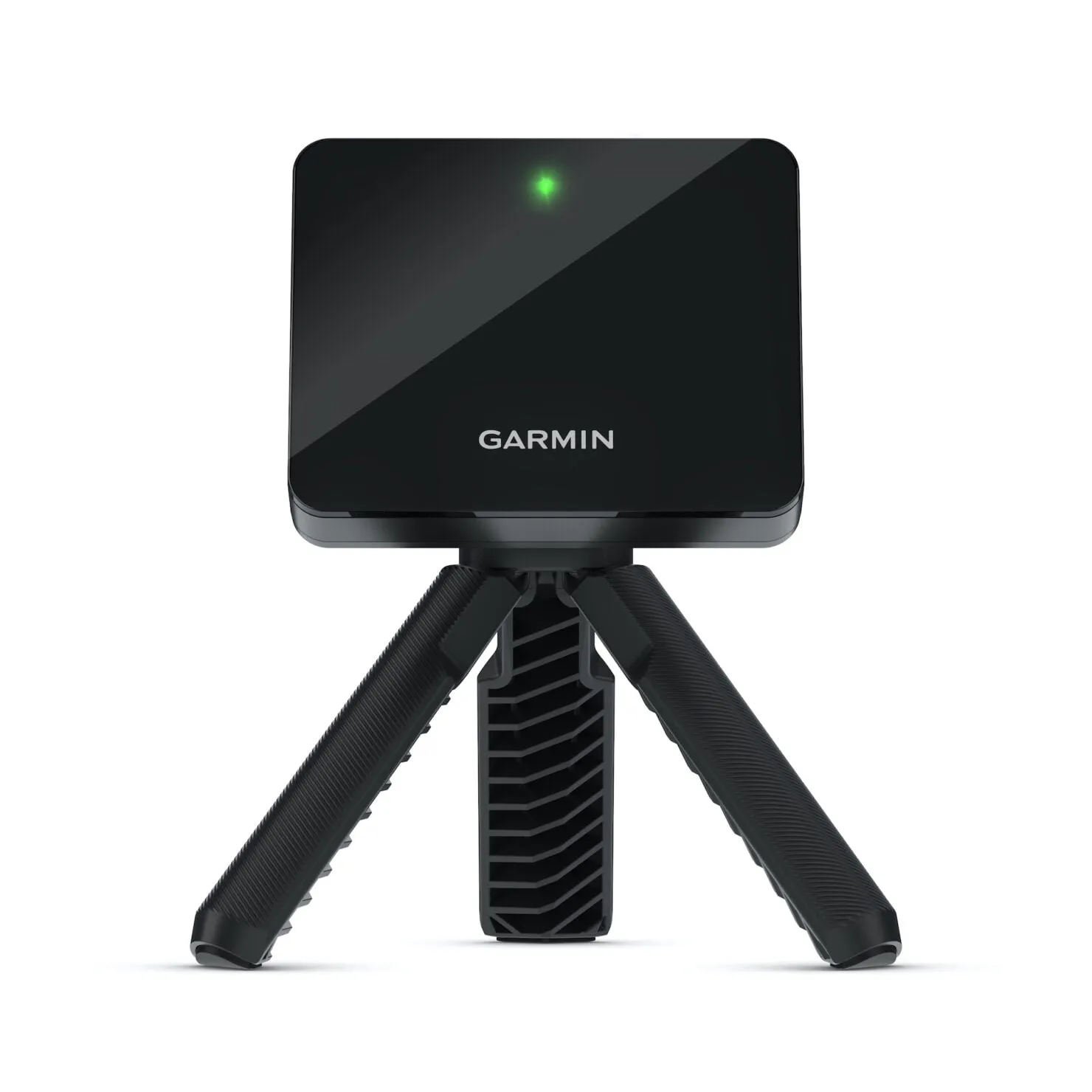
Our take: buy the net and never look back if practice is the goal, the room is shared, or the budget needs to stay focused on the monitor and the mat. A Garmin Approach R10 on a tablet, a decent mat, and a return net is a complete practice system, and it will make you better if you use it three times a week.
Skip straight to the enclosure if you already know the room is dedicated, projected course play is the whole point, and you have measured the space for a screen, a projector, and safe side coverage. In that case, the net is a delay, not a saving, and you will buy the enclosure anyway.
The middle buyer, unsure on all three counts, should buy the net first. It's the cheapest way to learn what you actually want, and a good return net keeps its value as a practice tool even after the enclosure goes up. The net is not the poor version of the simulator. It is the practice version, and for a lot of golfers, practice is the whole game.
Sources: Impact screen vs net, The Net Return Pro Series V2 review, Carl's Place DIY enclosure kit.
Shop the post