Blog
Garmin Approach R50: what the flagship camera unit buys you
A $4,999 all-in-one with a 10 inch screen, three cameras, and 43,000 courses on board.
By the My Golf Obsession teamPublished Nov 2, 2026
Garmin
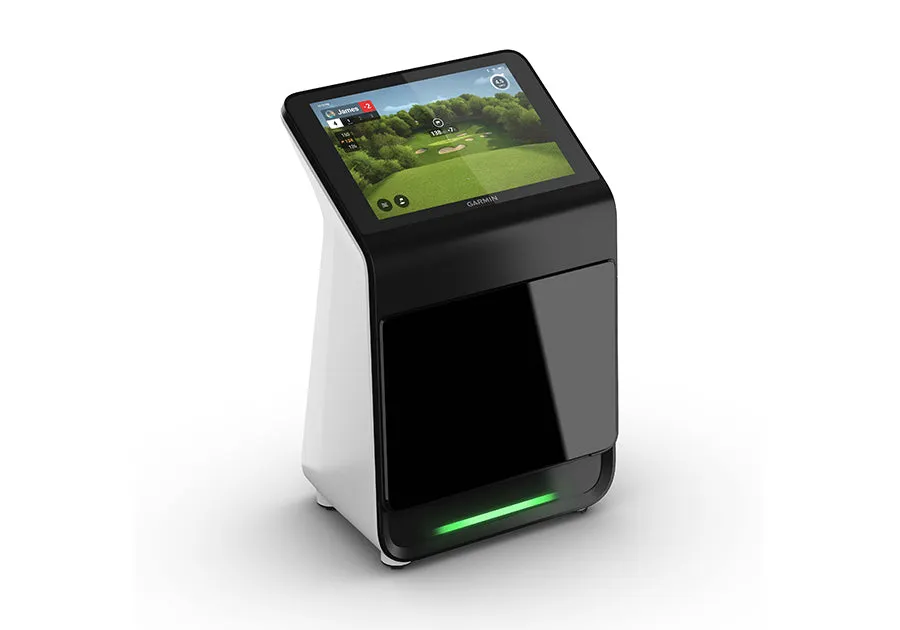
The Garmin Approach R50 costs $4,999 as of Nov 2, 2026, and most of that money buys independence. It measures the shot, shows the shot, and plays the course, all on its own 10 inch touchscreen. No phone, no PC, and no projector are needed for a basic session, though a projector still helps if you want a full simulator room.
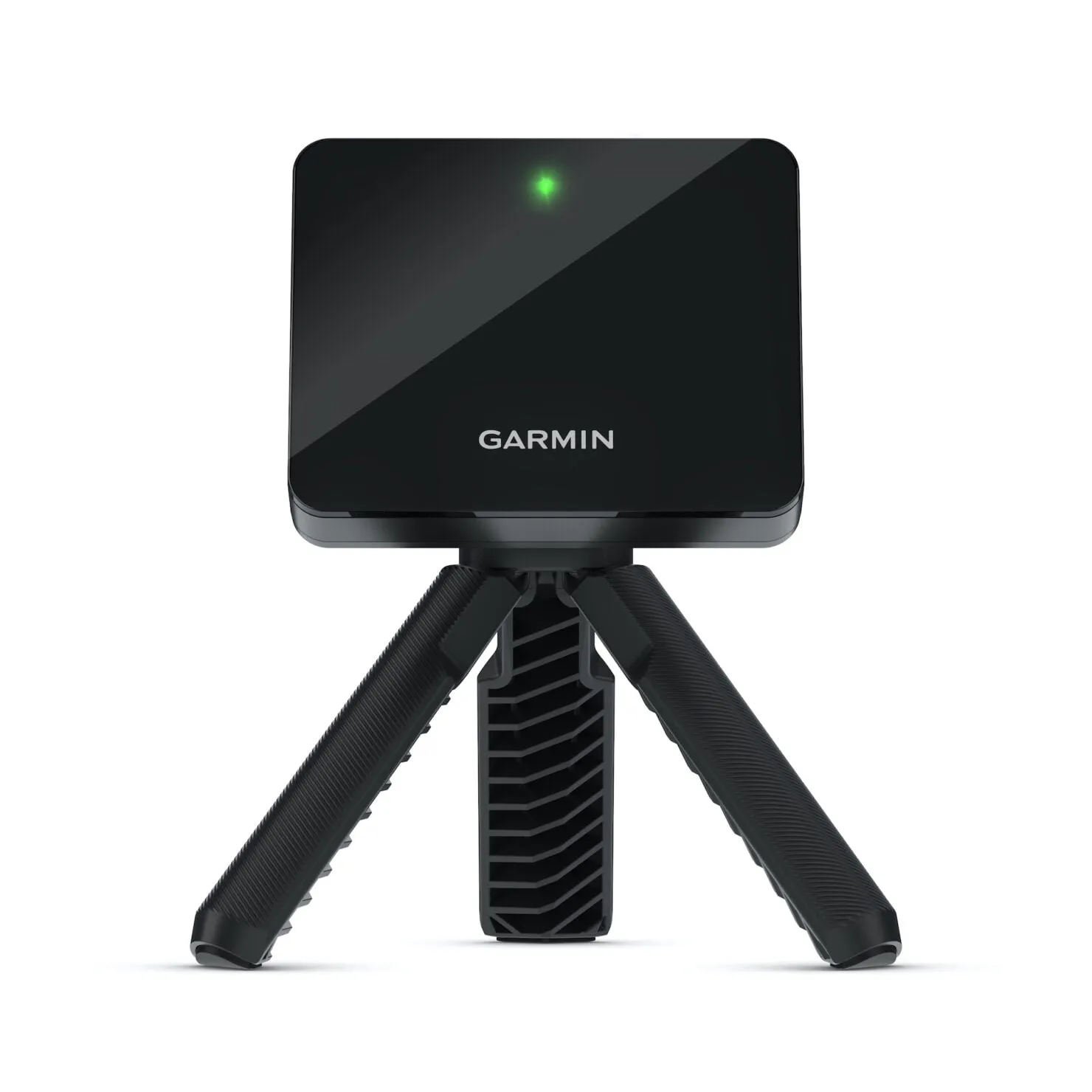
That independence is the whole pitch against the cheaper Garmin in the same family. The Approach R10 costs $499.99 as of Nov 2, 2026, and it needs a phone or tablet to show anything. The R50 is ten times that price, and the question is whether the extra $4,500 buys data you will actually use, or just a bigger screen.
What the R50 is
The R50 is a portable launch monitor and simulator in one box. Three high-speed cameras sit beside the ball, and Garmin lists ball speed, launch angle and direction, spin rate and spin axis, carry and total distance, apex height, smash factor, and deviation, plus club head speed, face angle, club path angle, and angle of attack.
The screen is part of the product, not an accessory. It is a 10 inch color touchscreen, 800 by 1280 pixels, and it runs the driving range, training mode, impact videos, and Home Tee Hero course play. An HDMI output lets you send the picture to a projector or TV when you want a bigger image.
Key specs, from Garmin:
- Three high-speed cameras for ball and club measurement
- More than 15 ball and club metrics, including putting
- 10 inch color touchscreen, 800 by 1280 pixels
- 16.5 by 10.6 by 7.5 inches, 9 pounds
- Up to 4 hours of battery life, internal rechargeable battery
- HDMI, USB-C, Bluetooth, and Wi-Fi
- IPX3 water rating, so brief sprays and light rain, not a soaking
- Carrying case included
The size matters in a real room. This is not a pocket unit like the R10. It is a 9 pound box that sits beside the ball, and you need a sensible spot for it that keeps it out of the swing path. The payoff is placement. Camera units watch a small area around impact, so they need less room depth than a radar unit that sits behind you and watches the ball fly.
The sticker question, stated plainly
Club data comes with a condition. The R50 needs a club tracking sticker on the club face to measure club metrics. Garmin includes 250 stickers in the box, and one sticker goes on the face, centered in the upper middle section. Ball data does not need a sticker.
That is a small habit to build, not a deal breaker, but it changes how you practice. If you rotate through a full bag in a session, you will use stickers. If you mostly hit one club on the range, you will barely notice.
The upside is real. Because the cameras photograph the club at impact, the R50 measures total spin and spin axis indoors and outdoors, rather than estimating the axis the way a radar unit does indoors. For a golfer working on face control, that is the most important technical difference in this post.
Home Tee Hero and the membership
Home Tee Hero is Garmin's own course software, and on the R50 it runs on the device itself. It offers more than 43,000 courses, full rounds including putting, up to four players, and weekly tournaments with a global leaderboard.
Course play needs a Garmin Golf membership. The membership costs $9.99 per month or $99.99 per year, as listed by Garmin and its retailers. Practice mode, shot data, and impact video playback work without a membership. Course play and weekly tournaments do not.
Do the first year math before you buy. The R50 at $4,999 plus a year of membership at $99.99 is $5,098.99 in year one if course play is the plan, with no PC to buy.
See our Garmin Home Tee Hero software page for the current membership details, and check the Garmin Approach R50 deal page for the live price before you buy.
Third party software: the PC comes back
The R50 connects to GSPro, E6 Connect, E6 Apex, and Awesome Golf. That list is worth stating carefully, because it comes with a catch. Third party software needs a PC and a Wi-Fi connection, plus each publisher's own subscription. The all-in-one story ends the moment you leave Home Tee Hero.
GSPro is the one most buyers ask about. It costs $250 per year as of Nov 2, 2026, and it needs a Windows gaming PC. E6 and Awesome Golf have their own pricing, sold separately. If GSPro is your must-have software, budget for the PC and the license on top of the R50, and compare that total honestly against a camera monitor that already lives in a PC based setup. Our GSPro software page covers its price and requirements.
Battery, size, and the range test
Garmin rates the battery at up to 4 hours, and the unit weighs 9 pounds with a carrying case in the box. That is enough for a long range session or a full round at home, and it is short enough that a second session in one day needs a charge in between. The R10, by contrast, runs up to 10 hours and fits in a pocket, which is a genuine advantage for a golfer who practices all day at the range.
Outdoors, the R50 has another edge over radar. Its cameras are not affected by wind the way a radar reading can be, and it works with any golf ball, while the R10 gets its most confident indoor spin readings with Titleist RCT balls. Indoors, the R50 needs less depth than the R10, which Garmin places 6 to 8 feet behind the ball with at least 8 feet of ball flight in front.
R50 vs R10, side by side
- Price as of Nov 2, 2026: R50 $4,999, R10 $499.99
- Tracking: R50 three cameras beside the ball, R10 Doppler radar behind the ball
- Metrics: both list more than 15 ball and club metrics, but the R50 measures spin axis directly and the R10 calculates it indoors
- Screen: R50 built-in 10 inch touchscreen, R10 needs a phone or tablet
- Stickers: R50 needs a face sticker for club data, 250 included; R10 measures club data at the club head without a sticker
- Battery: R50 up to 4 hours, R10 up to 10 hours
- Weight and size: R50 9 pounds and 16.5 by 10.6 by 7.5 inches, R10 pocket size
- Course play: both use Home Tee Hero with a Garmin Golf membership, R50 on its own screen, R10 through the Garmin Golf app
- Third party software: both connect to GSPro and E6, with a PC and separate licenses required
Who should buy the R50, and who should stay with the R10
Our take: buy the R50 if you want a simulator that works the moment you set it down, you practice indoors in a room where radar depth is tight, and you care about measured spin axis and club face data. The built-in screen is not a gimmick for that buyer. It removes the PC, the phone mount, and the setup friction from every session.
Stay with the R10 if budget is the main question, if you practice mostly outdoors, or if you already own a phone or tablet you are happy to use as the screen. The R10 measures the core numbers, plays the same 43,000 plus Home Tee Hero courses with the same membership, and costs $4,500 less. Spend the difference on lessons, a better mat, or a projector, and you will probably improve faster than a bigger monitor alone would manage.
Consider a different camera monitor only if you already plan to run GSPro on a gaming PC every session. In that case, the R50's built-in screen then stops being the deciding feature, and the comparison becomes about data, software, and total system price.
The verdict
The R50 is worth its price for a specific buyer: a golfer who wants measured camera data, a self-contained simulator and a small room footprint, and is willing to pay $4,999 plus $99.99 a year for course play. The sticker routine and 4 hour battery are real tradeoffs. Third party software also brings the PC back into the room.
For everyone else, the R10 at $499.99 is the smarter Garmin buy. Buy the flagship if independence and measured spin are worth $4,500 to you. Otherwise, buy the R10 and spend the rest where it shows up in your scores.
Sources: Garmin's R50 vs R10 comparison for cameras versus radar, spin measurement, placement and battery, and Garmin's R50 product details for specs, stickers and course count. Check the deal pages linked above for live prices before you buy.
Shop the post