Blog
BenQ TH671ST vs Optoma GT2000HDR: The budget short-throw decision
Two cheaper short-throw projectors for simulators. One wins on brightness, the other on price. How to pick.
By the My Golf Obsession teamPublished Oct 30, 2026
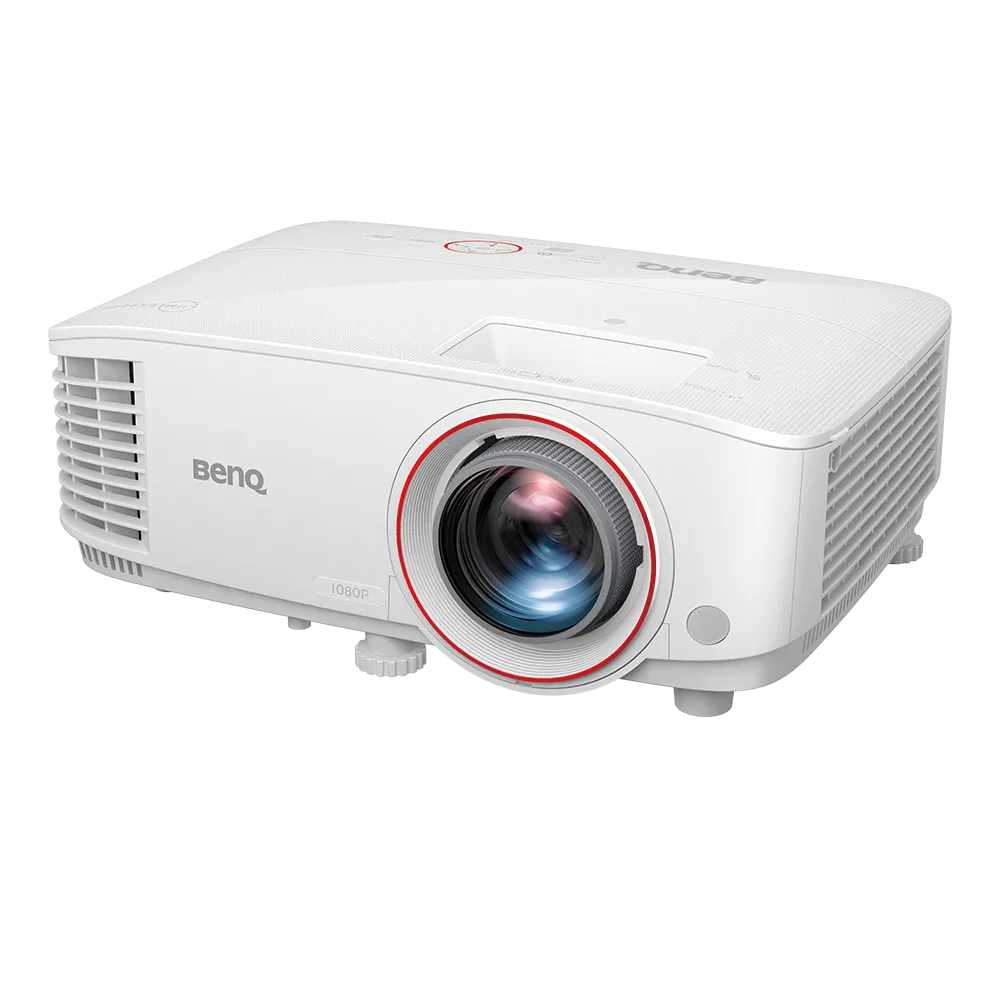
Image via BenQ
The takeaway is simple: both of these projectors fill a simulator screen in 1080p, and the right one depends on your room, not on the brand badge. The BenQ TH671ST costs less upfront. The Optoma GT2000HDR costs more upfront, throws a bigger image from closer in, and never needs a lamp change. Measure your room first, then pick.
Prices below are as of Oct 30, 2026. Check our deal pages for the live price before you buy, because prices move and sales end.
The specs side by side
- BenQ TH671ST: 1080p (1920 by 1080), 3,000 ANSI lumens, 0.69 to 0.83 throw ratio with 1.2x zoom, 240W lamp, 10,000:1 contrast ratio, 16.7 ms input lag at 1080p and 60 Hz, 5W speaker, 33 dB noise in normal mode and 29 dB in Eco mode.
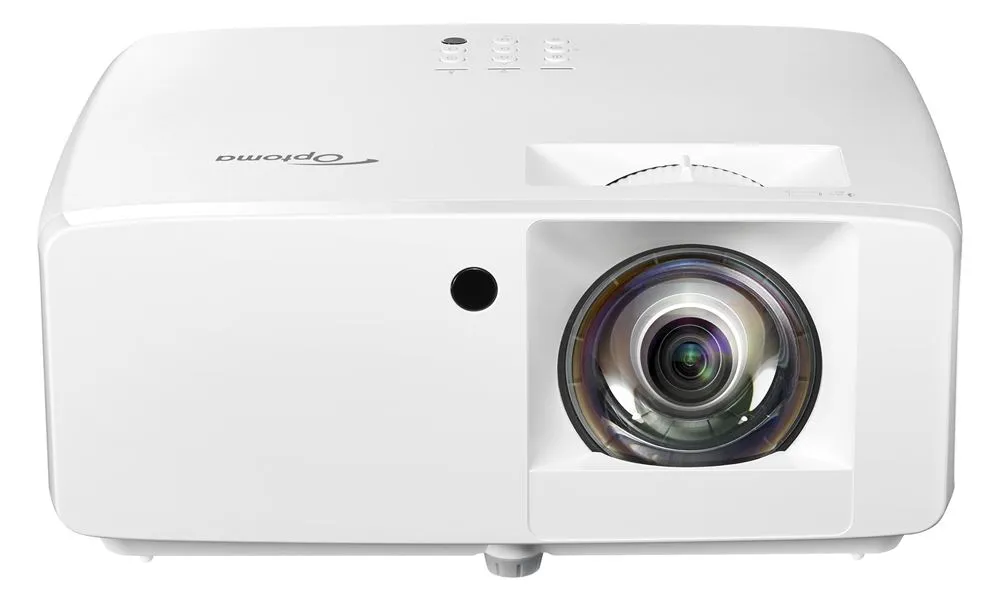
- Optoma GT2000HDR: 1080p (1920 by 1080), 3,500 ANSI lumens, 0.496 throw ratio with a fixed lens and no zoom, DuraCore laser rated at 30,000 hours, 300,000:1 contrast ratio, HDR10 and HLG support, 8.6 ms input lag at 1080p and 120 Hz, 15W speaker, 27 to 34 dB noise.
- Price gap as of Oct 30, 2026: TH671ST at $949 and GT2000HDR at $1,199, a $250 difference at the retailers checked today. See our BenQ TH671ST deal page and our Optoma GT2000HDR deal page for the live prices.
Neither projector is native 4K. Both give you a sharp 1080p course image, and at simulator viewing distances that is enough for most buyers. The GT2000HDR accepts a 4K input and shows it at 1080p. Do not pay extra for either one expecting a 4K image, because that is not what either one produces.
Throw distance: the decision that matters most
Throw ratio is distance divided by image width. Multiply the ratio by your screen width to get the lens to screen distance.
For a 10 ft wide image:
- TH671ST: 6.9 ft to 8.3 ft from lens to screen.
- GT2000HDR: about 5.0 ft from lens to screen.
That 2 ft to 3 ft difference decides a lot of builds. The GT2000HDR mounts closer to the screen, which keeps it further from your swing and easier to fit in a shallow room. The TH671ST needs more depth, but its zoom gives you placement slack. You can nudge it forward or back and still fill the screen, which matters when a ceiling joist or a light fixture lands exactly where you wanted the mount.
The catch is that the GT2000HDR has a fixed lens, so its placement is exact. Measure twice, mount once, and check the image size on the wall before you drill anything. With the TH671ST, the zoom forgives a mount that is a few inches off. Our projector throw distance guide walks through the measurement to take before you mount either one.
Brightness, light source, and the long bill
The GT2000HDR is brighter on paper, at 3,500 lumens against 3,000 for the TH671ST, and it pairs that with HDR10 and HLG support. In a room with some ambient light, that extra brightness helps the image hold up. In a dark room, both look good, and the brightness gap matters less than the room itself.
The bigger long term difference is the light source. The TH671ST uses a lamp rated at 4,000 hours in normal mode, 10,000 hours in Eco mode, and up to 15,000 hours in LampSave mode. You will replace that lamp eventually. The GT2000HDR uses a laser rated at 30,000 hours, with no lamp to replace. That is the main reason the Optoma costs $250 more upfront: you are buying years of not thinking about the light source.
Power draw tells the same story in a smaller way. The TH671ST draws about 320W in normal mode. The GT2000HDR draws 98W to 139W. The Optoma runs cooler on paper and cheaper to run, though neither number should decide the purchase on its own.
Noise, speakers, and the living room test
On noise, the two are close. BenQ rates the TH671ST at 33 dB in normal mode and 29 dB in Eco mode. Optoma rates the GT2000HDR at 27 dB minimum and 34 dB maximum. In a garage, neither one will bother you over the sound of a golf swing. In a quiet living room, Eco mode on the BenQ and the low end of the Optoma range are both fine, and the projector fan will fade into the background once the sim audio is on.
On speakers, the Optoma wins on paper, with a 15W speaker against a 5W speaker in the BenQ. In practice, treat both as backup audio. A sim room sounds far better through a soundbar or external speakers, and neither built in speaker should be the reason you pick a projector.
Input lag is a draw for most golfers. The BenQ is rated at 16.7 ms at 1080p and 60 Hz. The Optoma is rated at 8.6 ms at 1080p and 120 Hz, and about 16 ms to 17 ms at 60 Hz. At 60 Hz, which is how most sim PCs run, they feel the same. Only a high refresh rate gamer gains from the Optoma here.
Verdict by room
Buy the BenQ TH671ST if your room has the depth, roughly 7 ft or more from lens to screen for a 10 ft wide image, and if the lowest upfront price matters most. It is a proven short-throw 1080p projector, the zoom makes mounting forgiving, and the $250 you save buys a mount, a cable run, or a chunk of a better mat.
Buy the Optoma GT2000HDR if your room is shallow, if you want the projector mounted close to the screen and well clear of your swing, or if you want a laser you never have to service. The fixed lens demands careful measuring, but the payoff is a brighter image from a shorter distance and no lamp replacement in your future.
Our take
Our take: for most first time simulator builds, the room decides, and the room usually points to the Optoma. Shallow rooms are common, ceiling mounts land where they land, and a laser that lasts 30,000 hours removes a chore. But if your room already clears the BenQ throw distance with room to spare, take the $250 saving and spend it somewhere you will feel it, like the mat or the enclosure. Either projector fills the screen. Only one fits your room without a compromise, and that is the one to buy.
Sources: BenQ TH671ST overview, Optoma GT2000HDR product page, Top Shelf Golf GT2000HDR listing, and Top Shelf Golf TH671ST listing.
Shop the post