Blog
Ball data vs club data: Which numbers change your game?
Ball data tells you what the shot did. Club data tells you why. Most golfers only need one of them.
By the My Golf Obsession teamPublished Oct 27, 2026
Square Golf
The takeaway is simple. Ball data tells you what the shot did. Club data tells you why it did it. Most golfers only need the first set, and paying for the second set before you need it is the most common overspend in launch monitors.
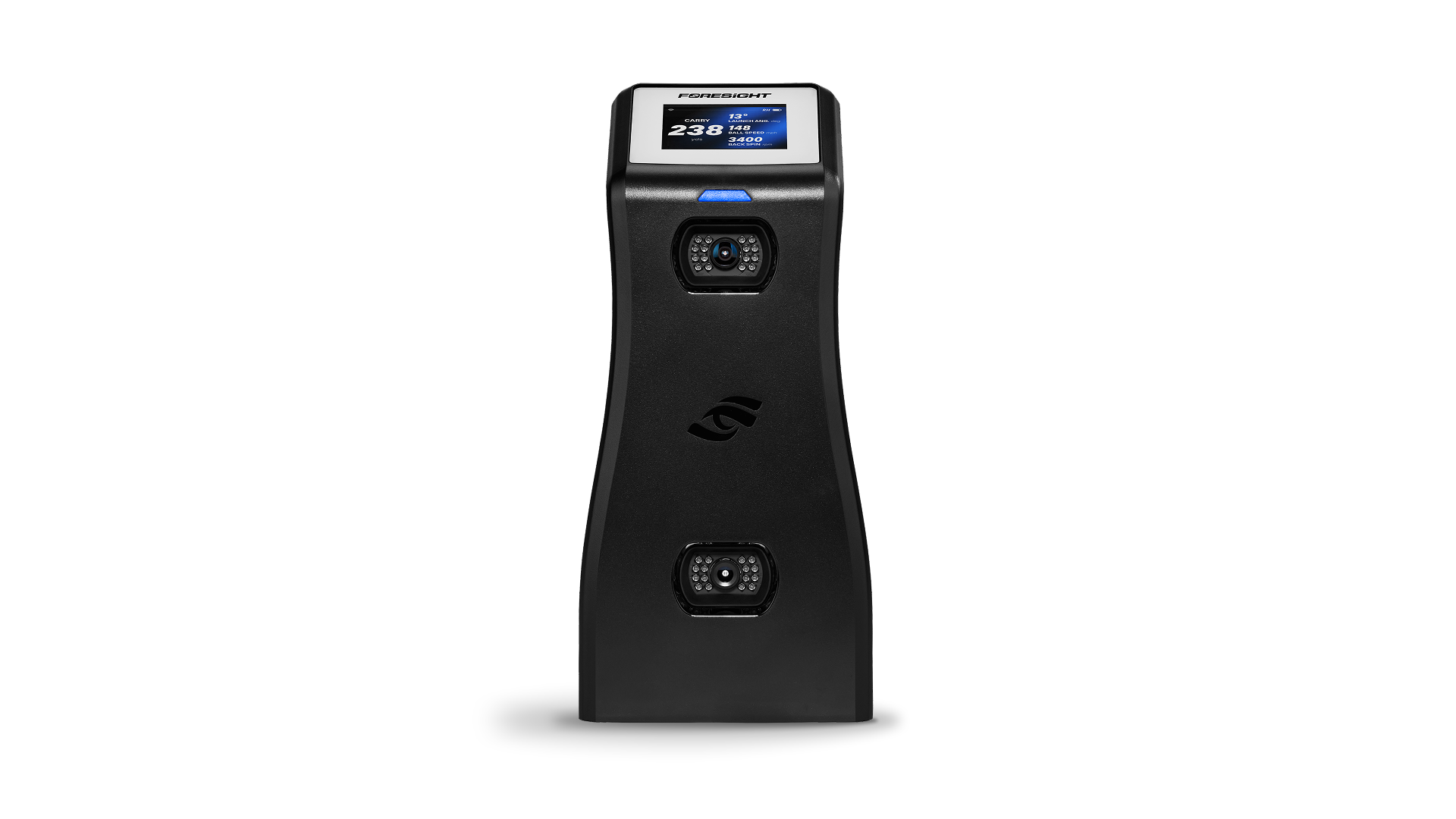
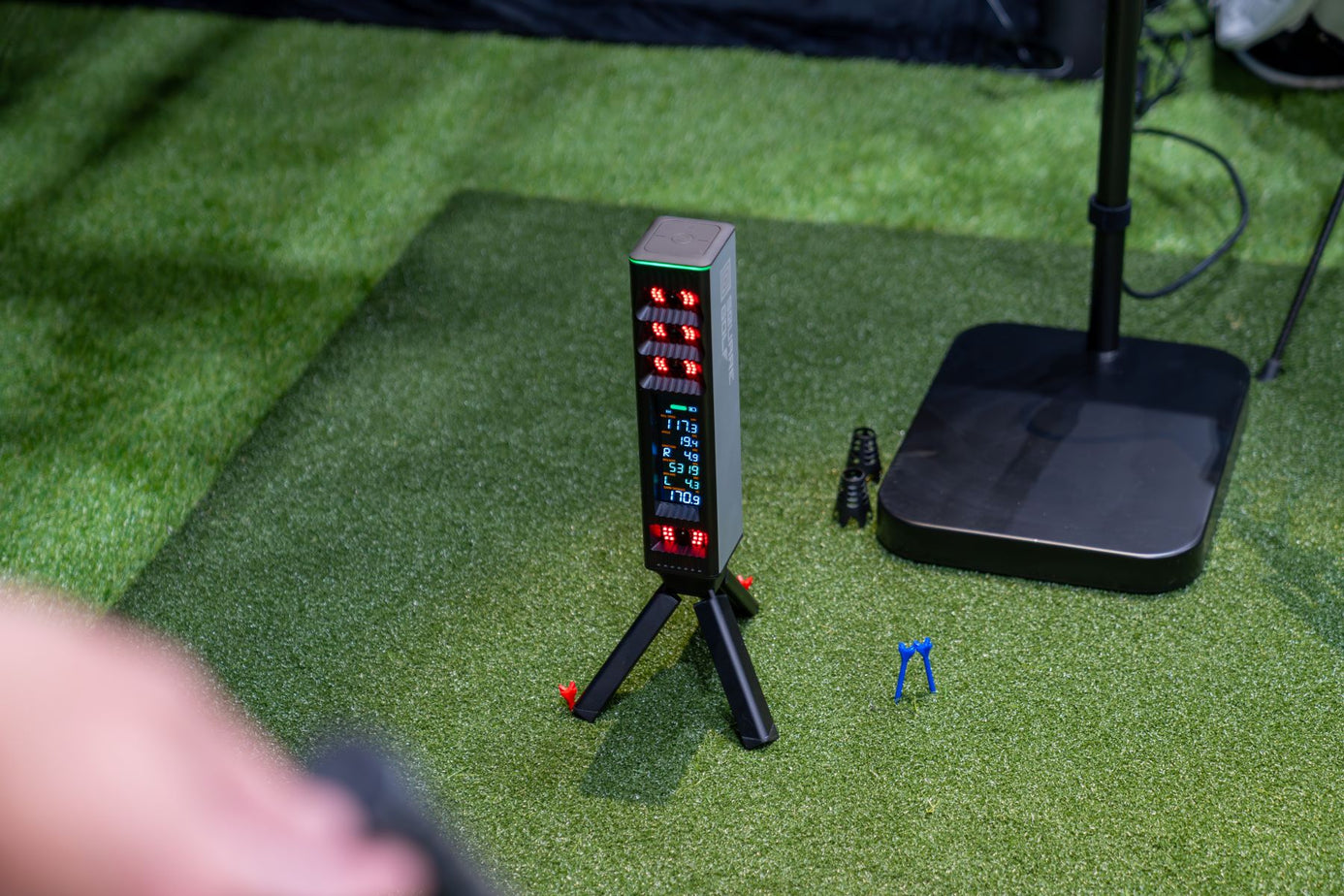
That distinction is not abstract anymore. The new Foresight GC2 measures ball data only, superbly, and no club data at any price. The Square Omni, at a similar price, measures both. Choosing between them starts with an honest question: when you mishit a shot, do you want the result, or the cause?
Ball data: what the shot did
Ball data describes the ball from the moment it leaves the clubface. Every number answers a version of "what happened?"
- Ball speed: how fast the ball left the face. A 7 iron at 120 mph goes farther than the same club at 110 mph, all else equal.
- Launch angle: how high the ball started. Too low, and the ball never holds a green. Too high, and it balloons into wind.
- Launch direction: where the ball started relative to your target. A ball that starts left and stays left is a different problem from one that starts straight and curves.
- Spin: back spin, side spin, total spin, and spin axis. Back spin holds the ball up and stops it on greens. Side spin is the curve you see. Spin axis is the tilt that predicts that curve.
- Carry distance: how far the ball flew before it first hit the ground. This is the number that builds a yardage book.
- Total distance: carry plus roll. Useful on firm fairways, less useful for an approach shot.
- Offline distance: how far the shot finished from the target line. This is the miss, in yards, not in feelings.
- Peak height, descent angle, hang time, and curve: how the flight looked on the way there. A steep descent angle stops faster on a green. A long hang time matters into wind.
The GC2 measures all 14 of those ball numbers with two cameras, according to Foresight. Its list is carry distance, total distance, ball speed, launch angle, launch direction, back spin, side spin, total spin, spin axis, offline, peak height, descent angle, hang time, and curve. That is a complete picture of the result. If your 7 iron carries 152 yards with 6,000 rpm of back spin, you know exactly what that club does on a normal swing. You do not need a single club number to trust that yardage.
Ball data solves gapping and shot shape problems. Which club fills the gap between your hybrid and your 5 iron? Ball data answers it in one session. Does your driver draw or fade under pressure? Ball data shows the curve, shot after shot, without guessing.
Club data: why the shot did it
Club data describes the club at impact. Every number answers a version of "what did I do?"
- Club speed: how fast the clubhead moved. Divide ball speed by club speed and you get smash factor, a measure of strike quality. A center strike is efficient. A toe strike is not, even at the same swing speed.
- Club path: the direction the clubhead traveled through impact, in to out or out to in. Path is the main driver of curve direction.
- Face angle: where the clubface pointed at impact, relative to the target and to the path. An open face with an out to in path is the classic slice recipe.
- Attack angle: whether the clubhead moved down or up through the ball. Hitting down on an iron and up on a driver are both correct, for different clubs.
- Dynamic loft: the effective loft of the face at impact, which is not the same as the loft stamped on the club.
- Impact location: where on the face you struck the ball. A heel strike and a toe strike can produce the same ball speed and very different flights.
The Square Omni measures this second set alongside full ball data. Shop Indoor Golf lists its club data as swing path, face angle, dynamic loft, angle of attack, and impact location, plus club speed and smash factor. Impact location needs stickers on the clubface. Ball data needs no stickers and no marked balls.
Club data solves cause problems. Your ball slices, and ball data alone shows side spin and offline distance. Club data shows the open face and the out to in path that created them. Your driver goes nowhere despite a fast swing, and smash factor shows the strike was poor. Your irons fly inconsistently, and impact location shows you are catching half of them toward the toe.
The honest test
Ask yourself what you actually do with numbers after a practice session.
If you check carry distances, compare clubs, and track whether your dispersion tightens over a month, ball data is enough. That covers most golfers, including good ones. A scratch player building a yardage book before a qualifier needs trusted ball numbers, not a lecture on path. A weekend player checking wedge gaps needs carry and spin, not dynamic loft.
If you keep asking "why did that happen" after the same miss shows up for weeks, club data earns its price. A persistent slice, a two way miss, a driver that never launches right, or a lesson built around path and face: those are club data jobs. So is a club fitting, where the fitter changes shaft or loft and needs to see what the club did, not just what the ball did.
There is also a middle case worth naming. Some golfers buy club data for reassurance, then never look at it. Path and face numbers only help if you know what to change when they move. If you do not have a coach, a lesson plan, or at least a drill tied to each number, the extra data sits unread on a screen. That is not a failure of the monitor. It is a purchase made one step ahead of the practice plan.
What this means for the GC2 and the Omni
The GC2 is the purest test of the ball data case. It costs $1,699 as of Oct 27, 2026, measures 14 ball numbers, and measures no club data on any tier. Our GC2 deal page tracks the live price. Our GC2 review walks through the full bill, including the Foresight+ membership needed for courses or GSPro.
The Omni is the other side of the same question. It costs $1,599 as of Oct 27, 2026, measures ball and club data, and Square charges no subscription fee for its own software. Our Omni deal page tracks the live price. The trade is not just data. It is Foresight's measured ball pedigree and membership ecosystem against Square's broader data set and lower running cost.
Neither choice is wrong. They answer different questions. Buying the GC2 and then regretting the missing club data is a research failure, not a product failure. Buying the Omni and never opening the club numbers is the same failure in the other direction.
Our take
Start with ball data unless you have a specific, named problem that club data solves. "My slice" counts, if you plan to work on path and face. "I want all the numbers" does not. Numbers you never act on are decoration.
If you already own a ball data only unit and a persistent miss shows up, that is the moment to upgrade or add lessons, not before. If you are buying your first monitor and you take lessons, get club data now, because your coach will use it from day one. Everyone else: buy the ball data, spend the difference on range time, and let a real miss tell you when club data is next.
Sources: Foresight's GC2 launch announcement for the 14 ball numbers, and Shop Indoor Golf's Square Omni listing for the Omni's ball and club data lists. Check the deal pages above for live prices before you buy.
Shop the post